
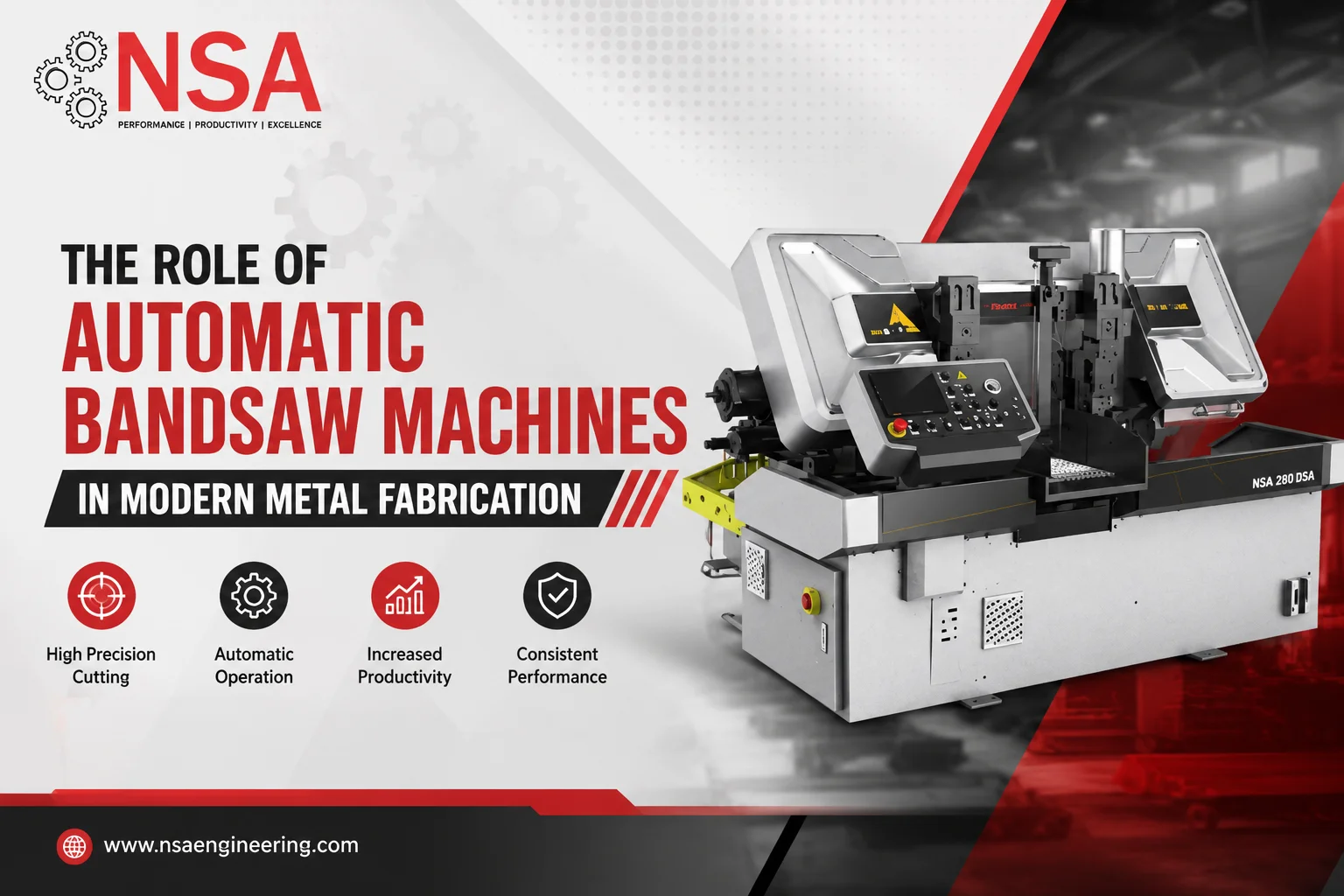
Metal fabrication has transformed through innovations in industrial methods. Unlike before, present-day fabricators are expected to deliver results in high quality, within quick turnaround time, and with tighter tolerances at low cost. To accomplish this feat, fabricators rely heavily on a machine that usually does not receive much attention- the automatic bandsaw machine. Different sectors of manufacturing, from steel fabricators to pipe manufacturers, depend on these machines for their operations. The article discusses how this machine has revolutionized metal fabrication.
What is an Automatic Bandsaw
In a manual bandsaw, the manual operator has to handle all the processes, from adjusting the feed rate to clamping material and keeping an eye on the cutting process. In an automatic bandsaw machine, all these processes are handled by the machine automatically. These are designed to work with a variety of materials and shapes, which is exactly the reason why they find application in so many industries. From automotive to aviation, oil and gas, pipe and tube manufacturing.
Why Metal Fabrication Use Automatic Bandsaw Machine
Precision That Manual Cutting Can’t Match
One of the main issues with cutting metal is consistency. A manually operated cutting saw is influenced by the skill and attentiveness of its operator. However, automatic band saw machines can eliminate this issue. The machine has features such as hydraulic blade tension, as well as feed vices keeping the blade aligned with great precision.
Higher Output
With automatic clamping, feeding, and cycle operation at the installation, the operator can manage the cutting process. This leads to an increase in the output of items produced, which is especially important for factories that work on a limited schedule.
Less Waste During Cutting
Even a small mistake when cutting the bar causes a high loss of material. Direct coupling of gearboxes and magnetic motor ensures better accuracy while decreasing the amount of waste.
Decrease in Operating Cost
Automation takes away the requirement for labour. It also helps cut down on indirect costs. There are fewer incidents of blades breaking due to human error, and there is less redoing of work and downtime caused by inconsistent cuts. When combined with features such as chip conveyors, hydraulic oil, and heat exchangers, the overall component cost reduces incredibly over time.
Automatic Bandsaw By NSA Engineering
We at NSA Engineering offer multiple variants of automatic bandsaw machine for a variety of applications. These are:
Standard- Designed for efficient daily cutting with basic automation abilities that include HMI controls, automatic bundle clamping and hydraulic blade tensioning. A great entry-level series for companies wanting to move from manual to automatic cutting processes.
H Max- Intended for regions which require high production capacity while at the same time ensuring durability in equipment, without moving to a more expensive machine option.
H Pro- A premium choice for heavy-duty, high-volume work, designed to deal with higher production capacities and lengthy work cycles with utmost precision.
Conclusion
Automatic bandsaw is an effective machine that makes metal cutting operations highly productive, minimizes error and gives more precise results. With proper maintenance, the machine can last for several years, giving high returns on the investment. If you are upgrading your fabrication facility with an automatic bandsaw machine, choose NSA Engineering. From HMI controls to carbon guide pressing, the features of our machines are exceptional.
FAQs
An automatic bandsaw handles the entire cutting cycle on its own, where the semi automatic bandsaw requires manual intervention for clamping and feeding the blade.
It is used to cut metal bars, pipes, tubes, and structural steel sections with minimal manual effort.
Bandsaw machines are best for metal cutting because it generates less heat, cut at high speed, and waste less material.
It is widely used in automotive manufacturing, aerospace component production, oil & gas, and pipe and tube fabrication industries.
These machines lower the dependency on manual labour, blade breakages, and reworks. Hence, these can also be used in small workshops to gain higher returns over time.